
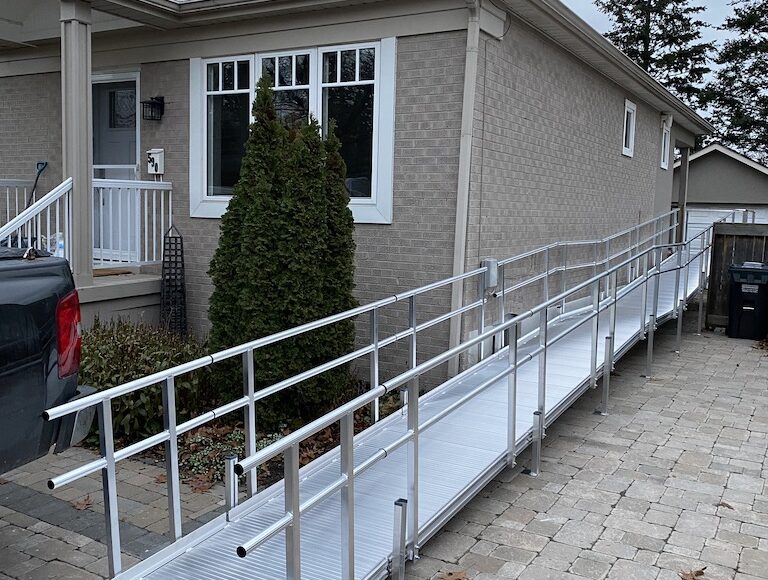
Wheelchair Ramps – What You Need to Know Before Installing One at Home
For millions of Canadians living with mobility challenges, something as simple as a front door step can become a daily barrier. Whether you’re a wheelchair user, a senior with limited mobility, or a caregiver helping a loved one, having the right wheelchair ramp in place can make an enormous difference to safety, confidence, and independence.
At First Choice Access, we’ve helped hundreds of homeowners and businesses across Brampton and the Greater Toronto Area choose and install ramps that are safe, durable, and perfectly suited to their space. In this guide, we break down everything you need to know – from materials and slope requirements to installation options and how to find the right fit for your home.
Why the Right Ramp Matters
Not all ramps are equal. A ramp that’s too steep, too narrow, or built from the wrong materials can create more risk than the stairs it replaces. Choosing a properly designed and professionally installed ramp means you’re not just adding a structure – you’re adding a safe pathway that supports real independence every single day.
The most common situations where a residential ramp becomes essential include front porch or entrance access, garage-to-home transitions, elevated deck or patio access, and post-surgery or long-term mobility recovery. Whatever the reason, getting the design right from the start saves time, money, and most importantly – prevents accidents.
Metal Ramps for Wheelchairs – Why Aluminum Is the Top Choice
When it comes to material, metal ramps for wheelchairs – particularly aluminum – are widely considered the gold standard for residential accessibility. Here’s why:
Aluminum is lightweight yet incredibly strong, making it easy to install and adjust without sacrificing load capacity. It doesn’t rust or corrode, which is critical in Canadian climates where rain, snow, and ice are a seasonal reality. It also requires virtually no maintenance compared to wood ramps, which need regular sealing, painting, and eventual replacement as they rot or warp.
Most modular aluminum ramps also come with textured, non-slip surfaces built into the platform – adding an important layer of safety during wet or icy conditions. At First Choice Access, our modular ramp systems are built from high-grade aluminum and designed to last for years without deterioration.
Understanding Wheelchair Ramp Slope
One of the most critical factors in any ramp installation is getting the slope right. The wheelchair ramp slope determines how easy – or difficult – it is for a wheelchair user to navigate the ramp safely, either independently or with caregiver assistance.
The widely accepted standard is a 1:12 ratio, meaning for every 1 inch of vertical rise, the ramp should extend 12 inches in length. So if your entrance is 24 inches above ground level, the ramp should be at least 24 feet long to maintain a safe gradient.
This ratio ensures the ramp is gentle enough for most wheelchair users to self-propel without excessive effort, and safe enough for caregivers to assist without strain. Steeper slopes – such as 1:8 or 1:6 – may seem more compact, but they significantly increase the physical effort required and raise the risk of tipping, especially for heavier power wheelchairs.
Wheelchair Accessible Ramp Slope – Standards and Compliance
For commercial properties and public spaces, the wheelchair accessible ramp slope must comply with the Accessibility for Ontarians with Disabilities Act (AODA) and the National Building Code of Canada. These regulations exist to protect users and ensure a consistent level of safe access across buildings.
For residential properties, compliance isn’t always legally mandated – but following the same standards is strongly recommended. A ramp built to proper accessibility specs protects you, your family, and any visitors who rely on mobility aids. It also makes a real difference if you ever plan to sell your home, as accessible properties are increasingly valued by buyers.
First Choice Access designs all ramp installations with compliance and safety at the forefront, whether for a private home or a commercial property.
Getting the Ramp Wheelchair Slope Right for Your Property
Every home is different. The ramp wheelchair slope that works perfectly for a 6-inch front porch step will look very different from one designed for a full floor elevation change. This is where a professional assessment makes all the difference.
Our team at First Choice Access visits your property, measures the elevation change, assesses the available space, and recommends the most appropriate ramp configuration – whether that’s a straight run, an L-shaped design, or a switchback system for tighter spaces. We also factor in the specific wheelchair or mobility aid being used, since power chairs and heavy scooters have different requirements from manual chairs.
If space is a concern and a ramp isn’t practical, we can also discuss our vertical platform lift options as an alternative solution.
Frequently Asked Questions
Q1. How long does a wheelchair ramp need to be for a 3-step entrance? A standard step is approximately 7 inches high, so three steps equal roughly 21 inches of rise. Using the 1:12 slope ratio, you would need a ramp at least 21 feet long. Our team can assess your specific entrance and recommend modular configurations that fit your available space.
Q2. Can a wheelchair ramp be installed without permanent modifications to my home? Yes. Modular ramp systems are designed to be freestanding and can be installed without drilling into your home’s structure. They are also fully reversible and can be reconfigured or relocated if your needs change.
Q3. Are your ramps safe to use in winter conditions? Absolutely. Our aluminum ramp systems feature textured non-slip surfaces designed to provide grip in wet and icy conditions. We also recommend adding handrails on both sides for additional stability during winter months.
Q4. Do you offer ramp rentals for short-term needs? Yes. First Choice Access provides temporary ramp rental solutions for post-surgery recovery, short-term mobility challenges, or visiting family members who use a wheelchair. Contact us to discuss available options.
Q5. Can I get funding to help cover the cost of a wheelchair ramp? There are government and community funding programs available in Ontario that may help offset the cost of accessibility modifications. Visit our Funding page to learn more about what may be available to you.
Ready to Make Your Home More Accessible?
Getting the right ramp installed correctly from the start is one of the most impactful investments you can make for mobility and safety at home. First Choice Access offers free home assessments across Brampton, Toronto, and the surrounding areas – so you can get expert advice with no obligation.
📞 Call us at (416) 836-1382
📧 Email: info@firstchoiceaccess.ca
📍 10 George St N, Suite #180, Brampton, ON L6X 1R2


Leave a Comment